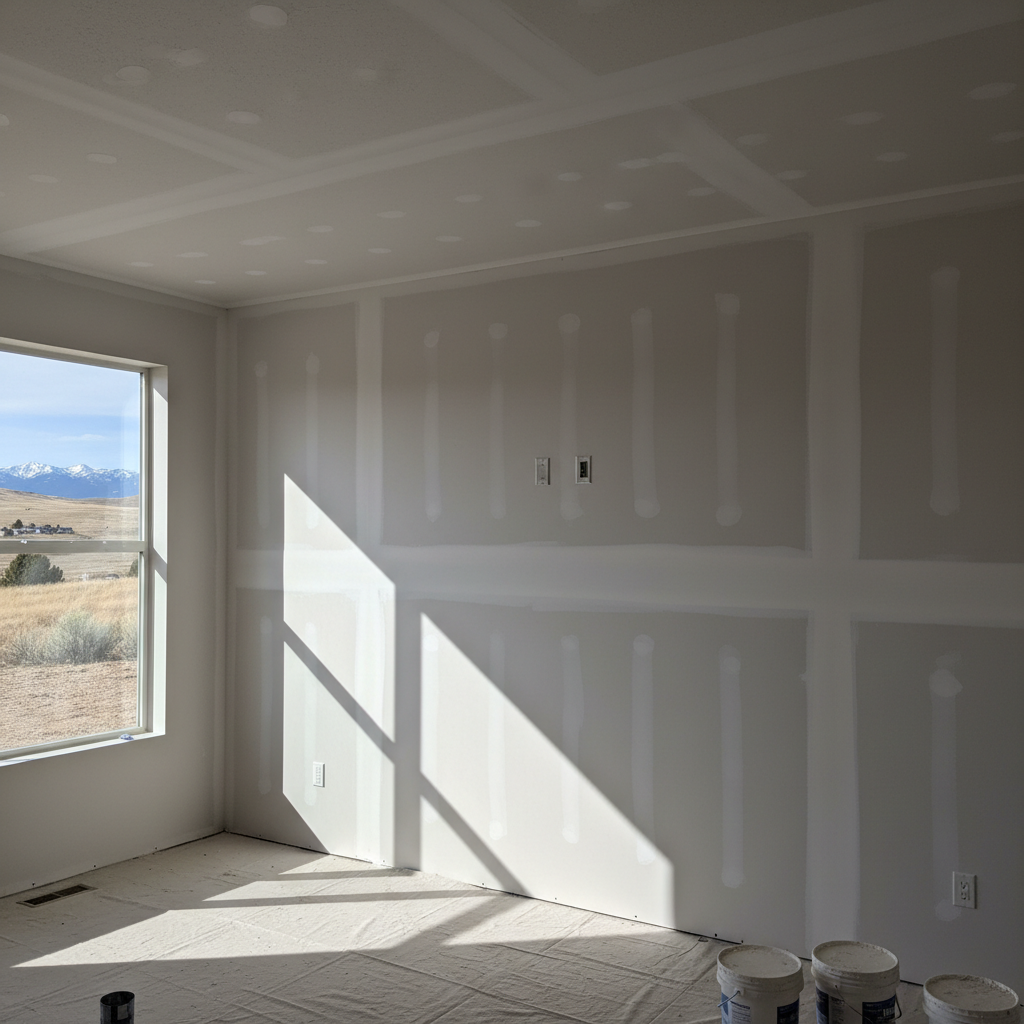
Drywall isn't a set-it-and-forget-it kind of deal. Sure, once it's up and painted, it looks solid. But your home breathes, settles, and deals with some pretty wild temperature swings here in Billings. That all puts stress on your walls. If you want that fresh, smooth finish to last, you've got to give it a little love.
Extending Your Drywall's Lifespan
The best way to make your drywall last? Good initial installation, obviously. But after that, it's about minimizing stress. Keep your home's humidity levels consistent. That means a humidifier in the dry winter months and maybe a dehumidifier in the summer if things get damp. Wild swings in moisture can make the paper facing on your drywall expand and contract, leading to tape lines cracking or even nail pops. We see this a lot in older homes around the Heights where insulation might not be top-notch, and folks are cranking the heat then letting it get cold.
Another big one is protecting it from physical damage. You'd be surprised how many dings and dents we fix that could've been avoided. Use door stoppers, teach the kids not to treat the walls like a soccer goal, and be careful moving furniture. It sounds basic, but a little prevention goes a long way.
Regular Maintenance: What to Look For
You don't need to inspect your walls with a magnifying glass every day, but a quick once-over now and then is smart. When you're dusting or cleaning, just take a moment to look for anything out of the ordinary.
- Dusting and Cleaning: Drywall is pretty low maintenance. For most walls, a light dusting with a microfiber cloth is all you need. For minor scuffs, a damp cloth with a little mild soap usually does the trick. Just don't over-wet it; drywall doesn't like being soaked.
- Touch-Up Paint: Keep a small can of your wall paint handy. Little scuffs or marks can be dabbed away quickly. It's way easier than repainting a whole section later.
- Check for Cracks: Pay attention to corners, around windows and doors, and where walls meet ceilings. Small hairline cracks are often just normal house settling and can be filled with a little spackle and painted over.
- Look at Your Joints: The seams where two sheets of drywall meet are taped and mudded. If you see bubbling, peeling, or cracking along these lines, that's a sign something's up.
Warning Signs of Bigger Problems
Some issues are more than just cosmetic. These are the things that tell you a bigger problem might be brewing:
- Large, Spreading Cracks: If you see cracks that are wider than a credit card, running diagonally, or getting longer quickly, that could indicate structural movement. This isn't just a drywall problem; it's a house problem.
- Water Stains or Discoloration: Any yellow, brown, or dark spots on your drywall are a huge red flag. This means you've got a leak somewhere, and it needs to be found and fixed immediately. Water damage can lead to mold, rot, and serious structural issues.
- Soft or Spongy Areas: Push gently on your walls. If an area feels soft, spongy, or gives way easily, it's almost certainly water damage. Don't ignore this.
- Persistent Nail Pops: A few nail pops here and there over the years are normal as wood framing dries and shrinks. But if you're getting new ones popping up constantly, or in the same spots, it might point to framing issues or significant house movement.
- Mold or Musty Smell: If you see black, green, or fuzzy spots, or if there's a persistent musty odor, you've likely got mold growing behind or on your drywall. This is a health hazard and needs professional remediation.
When to Call a Professional
You can handle small cracks and scuffs yourself, no problem. But for anything more serious, it's time to call in someone who knows what they're doing. If you've got significant water damage, large cracks, widespread nail pops, or any signs of mold, don't try to DIY it unless you're truly experienced. You could make the problem worse or just cover it up temporarily.
For structural concerns, you might even need to call a general contractor or structural engineer before a drywall specialist. But once the underlying issue is fixed, that's where Billings Drywall Company comes in. We can assess the damage, remove compromised sections, repair the framing if needed, and put your walls back together so they look like new. Trying to patch extensive damage yourself often leads to uneven surfaces, visible seams, and a finish that just doesn't blend. We've got the tools and the know-how to get it done right, saving you headaches and probably money in the long run.
```