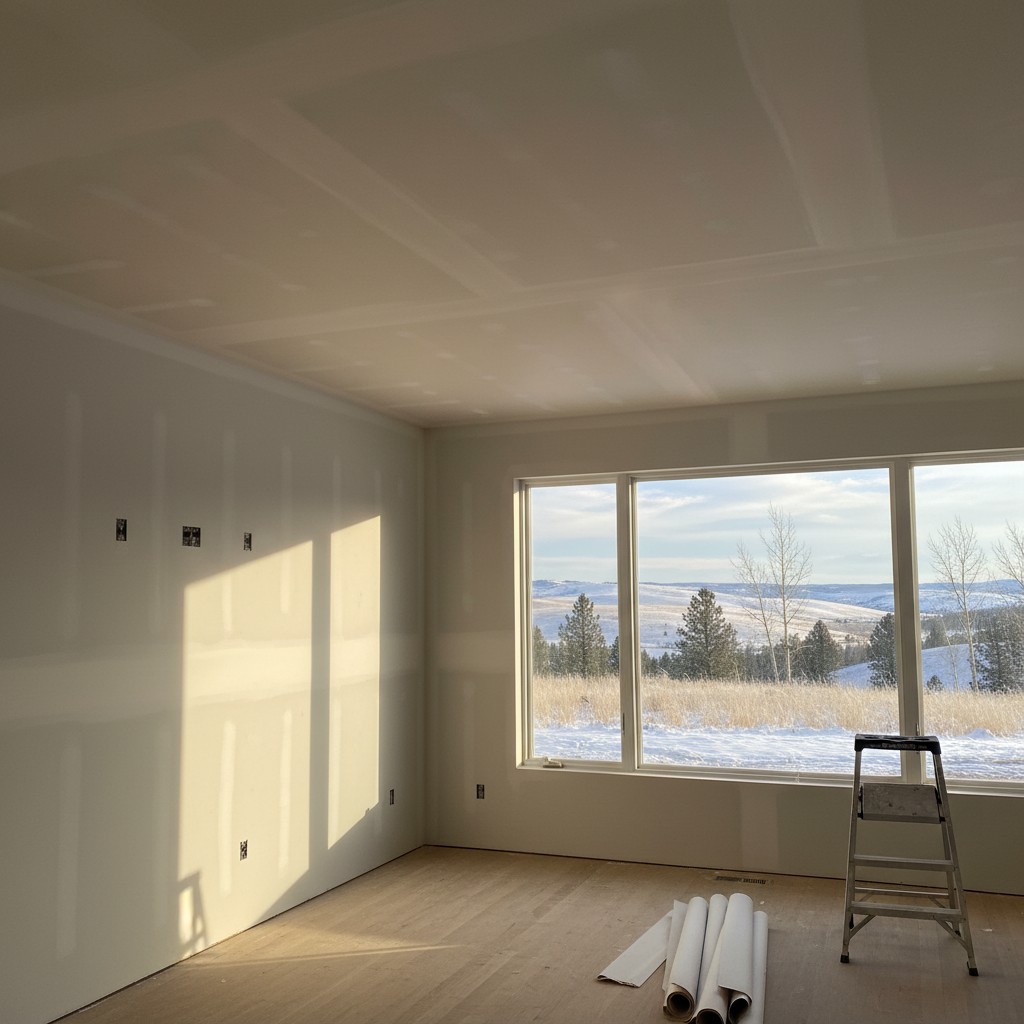
You would not try to pave a driveway in a blizzard. The same idea applies to drywall work, especially here in Billings. Our Montana climate has wild temperature swings as well as dry air. This climate actively impacts how well your drywall goes up and how long it holds up. As a local contractor, Billings Drywall Company has seen it all. We can tell you that timing is important for your Drywall Installation project.
When is the Best Time to Schedule Drywall Work in Billings?
If you have flexibility, spring and fall are usually the best times for major Drywall Installation projects in Billings. This is because you want moderate temperatures as well as stable humidity. Drywall is mostly gypsum and paper. Joint compound, which is the mud we use, is water-based. Both of these materials are sensitive to extreme conditions.
- Spring (April-June): This time is often ideal for Drywall Installation. Temperatures are usually mild in Billings. While we get some rain, it is generally not too humid. This allows the joint compound to dry at a good, consistent rate. It does not dry too fast or too slow.
- Fall (September-October): Fall is similar to spring. Fall brings moderate temperatures to Billings. The air starts to dry out a bit, which is good for curing the joint compound. You avoid the intense summer heat as well as the deep winter cold during this time.
You can still do Drywall Installation work at other times. Billings Drywall Company does it year-round. But if you have flexibility, those shoulder seasons are prime. These seasons help us make sure you get the best possible outcome for your walls as well as your ceilings.
How Billings Weather Affects Your Drywall Project
Our climate is not just a minor detail. It is a major player in any Drywall Installation project in Billings. Billings sees everything from hot summers to cold, snowy winters. These extreme conditions put stress on building materials. Drywall is no exception to this rule.
Temperature Extremes
Extreme heat and cold can cause real problems for Drywall Installation. If it is too hot, especially above 90°F, the joint compound can dry too quickly. This makes it hard to get a smooth finish. It can even lead to cracking as the joint compound cures unevenly. Billings Drywall Company works to avoid this problem.
On the other hand, if it is too cold, below 50°F, the joint compound gets thick and hard to work with. It might not bond correctly. This can lead to issues like cracks as well as nail pops later on. In addition, drywall sheets can get brittle in freezing conditions. This makes them more likely to break during installation. Billings Drywall Company takes these factors into account.
We always aim to keep the indoor temperature between 55°F and 70°F during Drywall Installation. We also keep it in this range for at least 48 hours afterward. This is important for proper drying and curing of the drywall. If Billings Drywall Company is working in the middle of winter in a new build out in the Heights, we will make sure the space is heated adequately as well as consistently.
Humidity Levels
Billings is not known for high humidity all year. However, humidity does change. Our average humidity is around 55%. August is the lowest at 45%, and December is the highest at 61%. High humidity, especially above 70%, can slow down drying times for joint compound a lot. This can sometimes double the drying time. This can delay the whole Drywall Installation project. It can also affect the quality of the finish, possibly leading to starved joints or shrinking along seams. Low humidity, like what we often see in summer, can also be a challenge if it dries the mud too fast. Billings Drywall Company aims for around 50% relative humidity for Drywall Installation.
Precipitation and Moisture
Direct water exposure is the worst enemy of drywall. Even small leaks can cause serious damage. This can lead to mold or weaken the wall's structure. While Billings Drywall Company works indoors, if your roof is not on or your windows are not sealed, rain or melting snow can soak the drywall. Wet framing can warp. This makes proper Drywall Installation a problem. We always make sure the building envelope is secure before we start hanging drywall sheets.
Protecting Your Drywall Investment Year-Round
Once your Drywall Installation is complete and finished, you want it to last. Here is how to protect it from the specific challenges of living in Billings:
- Maintain Consistent Indoor Temperatures: You should avoid big temperature changes inside your home. This is especially true between seasons. Our climate causes homes to expand and contract. This can stress drywall seams and lead to cracks. Keeping your thermostat relatively stable helps minimize this movement.
- Control Humidity: Billings is not a swamp. However, running a humidifier in the dry winter months can help prevent the air from pulling too much moisture out of your walls. This reduces the risk of cracking. If you notice any dampness, you should address it right away.
- Address Leaks Promptly: This seems clear. Even a small roof leak or a leaky pipe can cause big problems for drywall. If you see water stains or feel dampness, you should investigate and fix the source right away. Water damage can lead to mold as well as structural issues.
- Consider Drywall Texturing: Many Billings homeowners choose textured walls. Beyond how they look, texture can help hide small hairline cracks that might appear over time. These cracks happen because of our climate's stress on materials. Texture adds a forgiving layer that helps keep your walls looking good longer.
- Do Not Ignore Small Cracks: If you see small cracks appearing, especially around windows, doors, or corners, you should get them looked at. Sometimes they are just cosmetic. However, they can be a sign of settling or movement. Catching them early can prevent bigger problems later on. Our team at Billings Drywall Company handles these kinds of repairs all the time. We make sure they are blended smoothly.
The main point is that your home in Billings is built to withstand a lot. However, it needs some help from you and your contractors. Understanding how our local weather affects drywall can save you problems as well as money in the long run. Billings Drywall Company takes these factors into account on every job we do. We make sure your walls are built to last against whatever Montana weather brings.