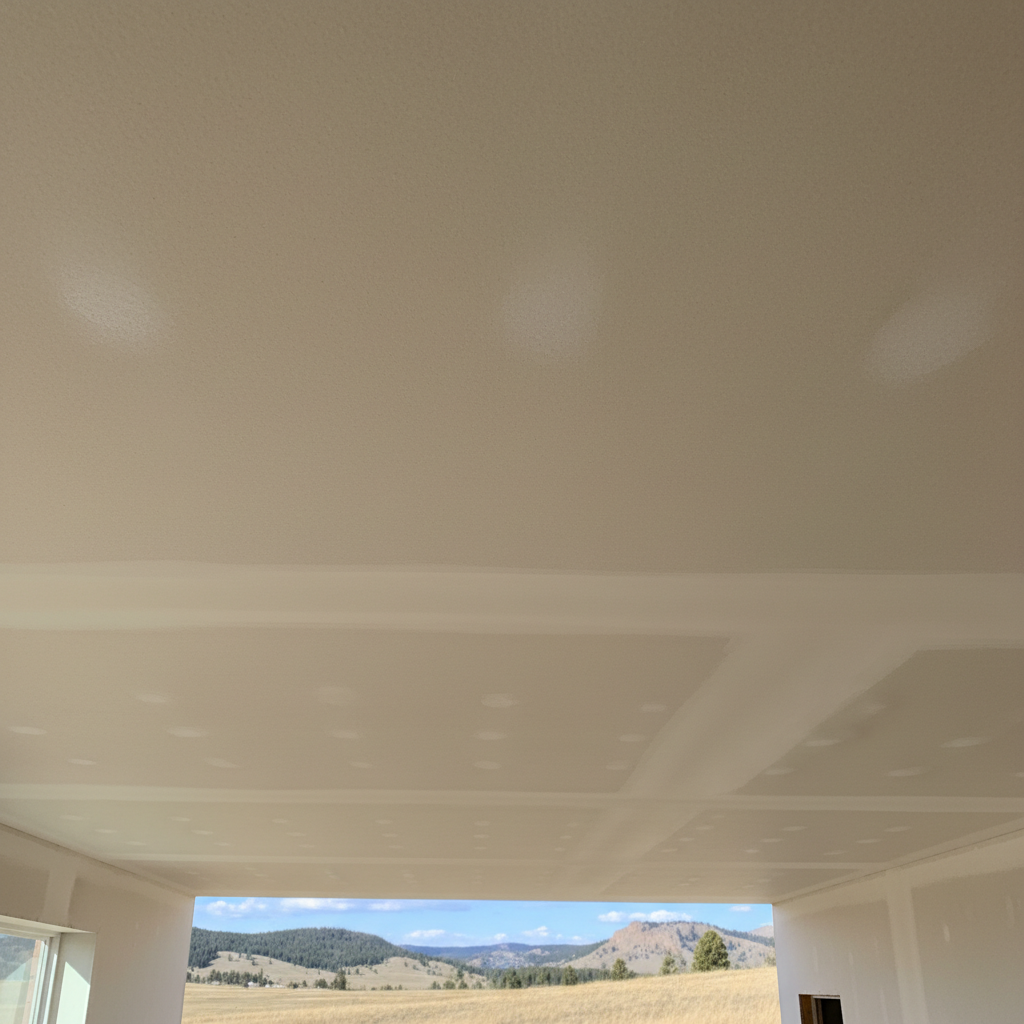
Alright, let's talk ceiling drywall. It's one of those jobs that looks simple enough on paper, right? Just screw up some sheets. But trust me, there's a world of difference between 'screwing up some sheets' and getting a ceiling that looks good and stays that way. As someone who's hung more drywall than I can count for Billings Drywall Company, I've seen it all – the good, the bad, and the 'oh dear, what happened here?'
Before You Even Think About Lifting a Sheet
First off, you need to be honest with yourself about your skills and your patience. Ceiling drywall isn't like hanging a picture. It's heavy, awkward, and it fights you every step of the way. Before you buy a single sheet, figure out a few things:
- Measure Twice, Cut Once (or Three Times): Get precise measurements of your ceiling. Don't just eyeball it. Account for any odd angles or penetrations for lights, vents, or access panels. You'll need to calculate how many sheets you'll need, plus a little extra for mistakes.
- Tools of the Trade: You're going to need more than just a screw gun. Think about a drywall lift – seriously, for ceilings, it's not optional unless you've got three strong friends who are willing to hold heavy sheets over their heads for hours. You'll also need a T-square, utility knife, tape measure, chalk line, a good sanding pole, and all the taping tools (mud pan, taping knife, finishing knives). Don't skimp on these; cheap tools make a tough job even tougher.
- Safety First: This isn't just a cliché. You'll be working overhead, often on ladders or stilts. Protect your eyes, wear a dust mask, and make sure your work area is clear. Falling off a ladder with a sheet of drywall isn't anyone's idea of a good time.
The Hanging Process: Where Things Get Tricky
Okay, so you've got your tools and your sheets. Now comes the fun part. Or the frustrating part, depending on your temperament. Here's what you're up against:
- Weight and Awkwardness: A standard 4x8 sheet of 1/2-inch drywall weighs about 50 pounds. Now imagine holding that over your head while trying to perfectly align it and screw it into joists. That's why I mentioned the lift. It's a lifesaver.
- Finding the Joists: You need to hit those ceiling joists every time. Use a stud finder and snap chalk lines. Missing a joist means your screws aren't holding anything, and that sheet could sag or even fall.
- Screw Placement: Screws should be driven just below the surface of the paper, without tearing through it. Too deep, and they lose their holding power. Too shallow, and they'll poke through your mud. It takes practice to get it right consistently.
- Cutting for Obstructions: Recessed lights, ceiling fans, vents – you'll need to cut precise holes for all of them. Measure carefully, transfer those measurements to your drywall sheet, and cut them out before you lift the sheet into place.
- Butt Joints and Tapered Edges: This is where the pros really shine. Drywall sheets have tapered edges on the long sides, designed for easy mudding. The short ends are butt joints, and they're a pain. You'll want to minimize these on your ceiling as much as possible, as they're harder to conceal without creating a visible hump.
Taping and Finishing: The Art of Disappearing Seams
This is where your ceiling goes from 'sheets of gypsum' to 'smooth surface.' It's also where most DIYers throw in the towel or end up with a ceiling that looks like a topographical map of the Beartooth Mountains.
- Mudding and Taping: You'll apply joint compound (mud) to all seams and screw heads, embed paper or fiberglass mesh tape over the seams, and then apply several more thin coats of mud, feathering them out smoothly. Each coat needs to dry completely, and then you'll sand it. This isn't a quick process.
- Sanding: Oh, the dust. Even with a good dust mask, you'll be covered. Sanding needs to be thorough but not excessive, or you'll sand right through the tape. The goal is a perfectly smooth, seamless surface.
- Lighting's a Killer: Natural light or even a strong work light can highlight every imperfection. What looks smooth under dim light can look like a disaster when the sun hits it just right. This is why pros use specialized lighting during finishing.
When to Call in the Pros (Like Us at Billings Drywall Company)
Look, I'm all for homeowners tackling projects they can handle. It saves money, and there's a real sense of accomplishment. But ceiling drywall? It's often beyond what most folks can realistically do well without a lot of prior experience.
Here's when you should seriously consider calling in a professional:
- Large Areas: If you're doing a whole house or even a large living room, the sheer scale of the work makes it incredibly daunting for a DIYer.
- High Ceilings: Vaulted ceilings or anything over 9 feet? That's a whole different ballgame for safety and handling.
- Complex Layouts: Lots of angles, curves, or cutouts for intricate lighting designs.
- Time Constraints: If you need it done quickly and to a high standard, a pro will be much faster and more efficient.
- Perfection is Your Goal: If you want a perfectly flat, smooth ceiling with no visible seams or screw pops, that's a professional-level finish. It takes years of practice to get that right.
It's not just about hanging the sheets; it's about the finishing. A poorly finished ceiling will stick out like a sore thumb every single day. If you're in Billings and you're staring up at your ceiling wondering if you've bitten off more than you can chew, don't hesitate to reach out. We can help you get that smooth, perfect ceiling you're dreaming of, without all the backaches and dust.