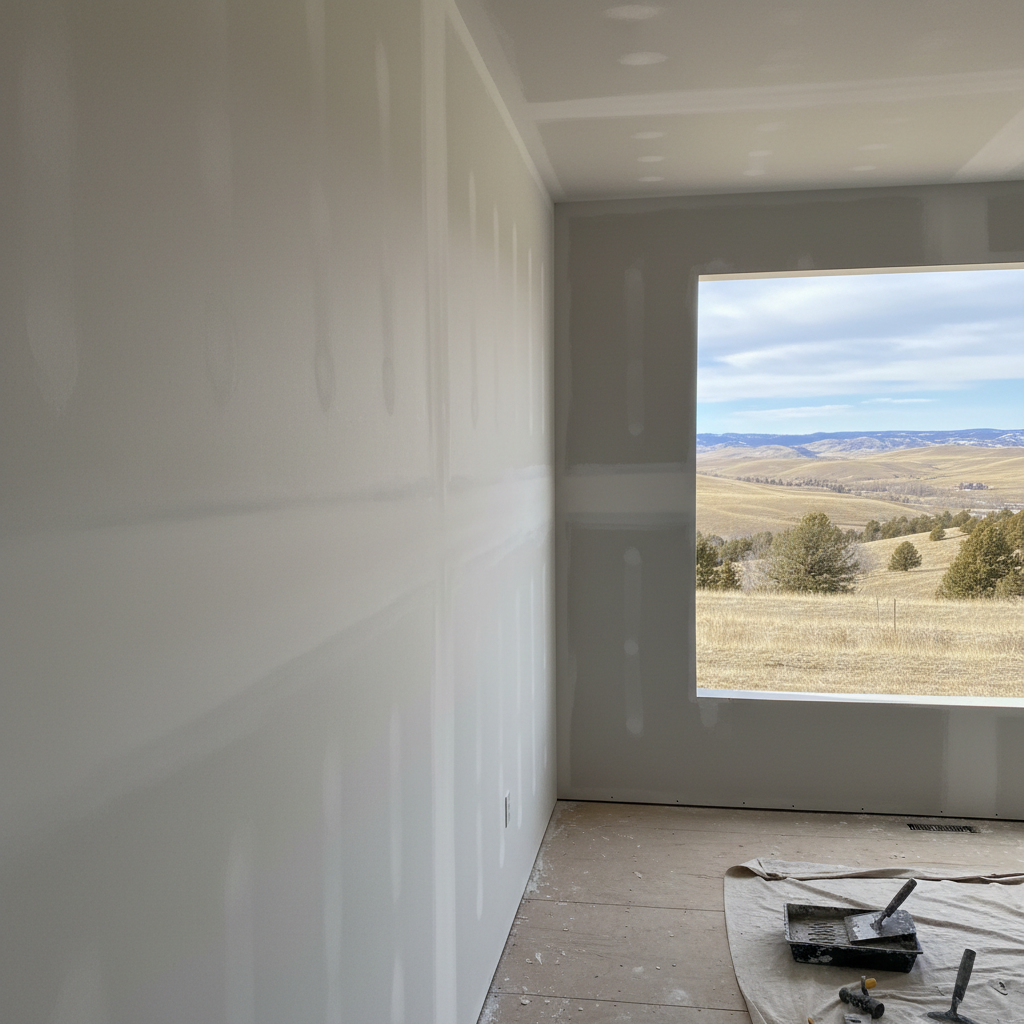
What's the difference between regular drywall and moisture-resistant (green board)? Do I really need green board?
Alright, let's clear this up right away. Regular drywall, or gypsum board, is what you'll find in most of your house – living rooms, bedrooms, hallways. It's good for general use, pretty stable, and easy to work with. It's your standard, everyday drywall.
Now, green board, that's your moisture-resistant drywall. It's got an additive in the core and a special paper facing that makes it less likely to absorb water and grow mold. Do you really need it? Well, in places with high humidity or direct water exposure, absolutely. Think bathrooms, particularly around showers and tubs, laundry rooms, and sometimes even kitchens, especially near sinks. It's not waterproof, mind you, but it buys you a lot more protection than regular drywall. For instance, if you've got an older home in the South Side with a small bathroom that steams up like crazy, green board is a smart move. It'll save you headaches down the road.
How long does it take to hang drywall in an average room?
This is one of those 'how long is a piece of string' questions, but I can give you a good estimate. For an average-sized room – say, a 12x12 bedroom – if we're just talking about hanging the sheets, a skilled crew can get that done in a day, maybe even less. But that's just hanging. You've got to factor in the taping, mudding, and sanding, which is where the real time goes. You're looking at multiple coats of mud, each needing drying time. So, from start to finish, for a single room, you're usually looking at 3 to 5 days, depending on humidity and how fast the mud dries. If it's a big project, like a whole basement finish, that timeline stretches out considerably.
What kind of screws and tape should be used? Does it matter?
You bet it matters! Using the right fasteners and tape is crucial for a durable finish. For screws, you want specific drywall screws. They're designed with a bugle head that countersinks perfectly into the drywall without tearing the paper, and they've got a sharp point for easy penetration. Don't use regular wood screws; they won't hold the board properly and you'll end up with popped fasteners. As for length, 1-1/4 inch is pretty standard for 1/2 inch drywall on wood studs. If you're going into metal studs, you'll need self-tapping screws.
Tape is another big one. You've got paper tape and fiberglass mesh tape. I generally prefer paper tape for most seams. It's strong, embeds well in the mud, and gives a really smooth finish. Mesh tape is quicker to apply because it's self-adhesive, but it needs a setting-type compound (hot mud) for the first coat to really get a strong bond, and it can sometimes show through if not properly feathered. For inside corners, paper tape is almost always the way to go for a crisp line. For patches or repairs, mesh tape can be handy, but for new construction, we're usually sticking with paper tape for the best results.
Can I hang drywall myself, or should I hire a professional?
Look, I'm not going to tell you it's impossible to hang drywall yourself. Plenty of folks do it. If you're handy, patient, and have a strong back, you can definitely tackle smaller projects, especially if it's just a few sheets. You'll save on labor costs, that's for sure. However, it's a skill that takes practice to get right. Getting those seams smooth, corners crisp, and avoiding screw pops takes an experienced hand. If you're doing a whole room or a larger area, or if you want a truly professional, paint-ready finish without waves or visible seams, hiring someone like us at Billings Drywall Company is probably your best bet. We've got the tools, the experience, and the crew to get it done efficiently and right the first time. Plus, lifting full sheets of drywall, especially 5/8 inch, can be a real pain, literally.
What's the deal with different drywall thicknesses (1/2 inch vs. 5/8 inch)?
Most residential walls use 1/2 inch drywall. It's lighter, easier to cut, and perfectly adequate for most applications. It's what you'll find in almost every home in Billings. However, 5/8 inch drywall, often called 'Type X' or 'fire-rated' drywall, is thicker and denser. It provides better sound insulation and, more importantly, offers increased fire resistance. You'll typically see 5/8 inch used in garages, especially on walls adjoining living spaces, or in multi-family dwellings where building codes require a certain fire rating between units. If you're finishing a basement and want better soundproofing from the upstairs, 5/8 inch can be a good upgrade, but it's heavier and a bit harder to work with.
What kind of prep work do I need to do before drywall can be hung?
Before any drywall goes up, the framing needs to be solid and clean. That means all studs and joists should be properly installed, plumb, and level. Any electrical wiring, plumbing, and HVAC ducts need to be roughed in and inspected. You don't want to be cutting holes for outlets after the drywall is up! Make sure there are no nails or screws sticking out from the framing that could puncture the drywall. We also like to see the area clean – no debris, dust, or old insulation lying around. A clear workspace makes everything go smoother and safer. If you're in an older part of town, like the Alkali Creek area, sometimes the framing can be a bit wonky, so making sure everything's squared up beforehand is extra important.